
Hard Board or Foam Board: Which One Should You Choose to Start or Progress in Surfing?
Are you hesitating between a hard board or a foam board to learn surfing, improve, or choose your first board? That’s normal. When starting out, we often see surfers with rigid, thin, fast, very stylish boards… and we think that maybe that’s what a “real” surfboard is.
In reality, the best board is not necessarily the most technical one. It’s the one that allows you to catch waves, stand up more easily, and stay confident in the water.
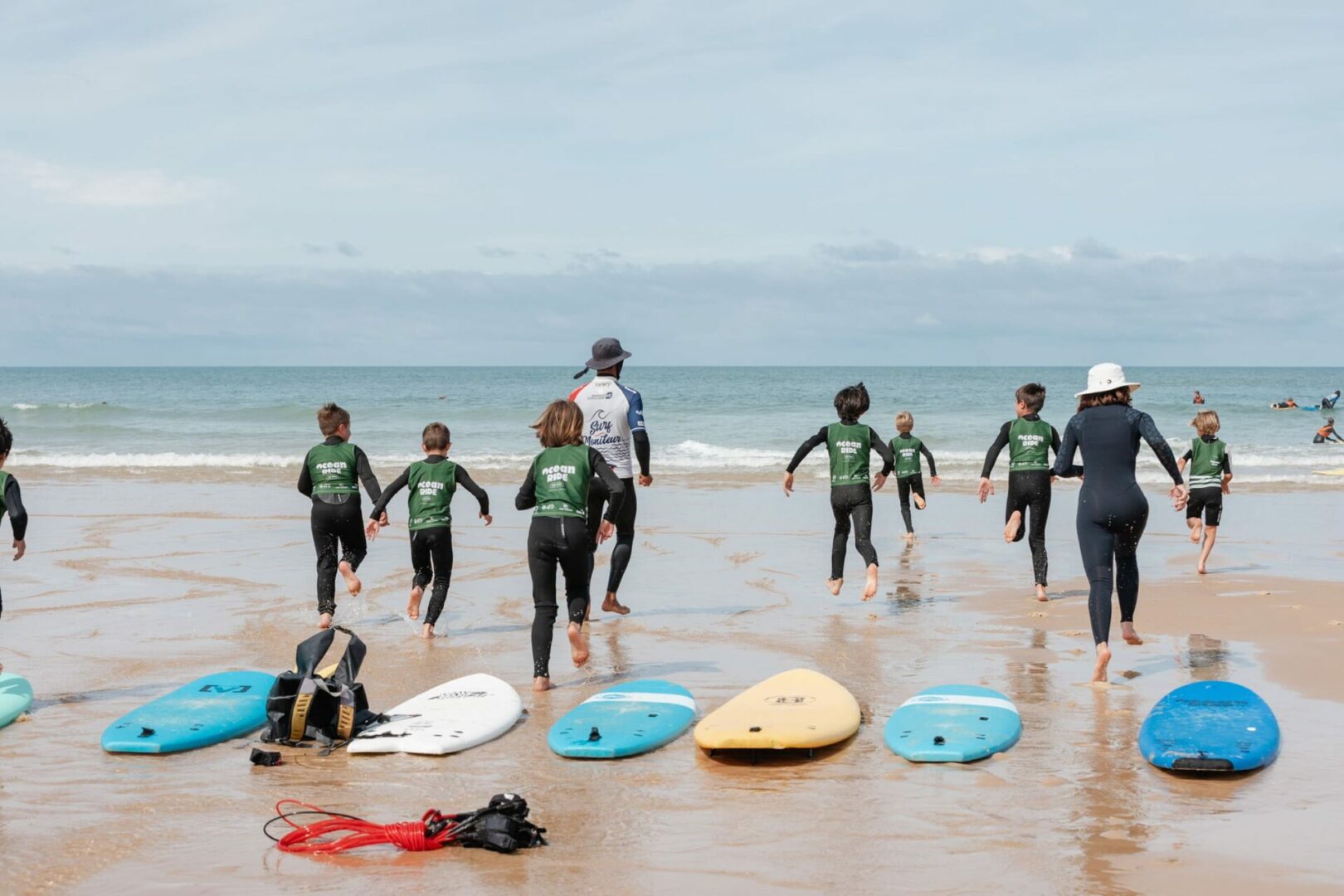
In Lacanau, where the waves can change quickly with the tide, wind, and sandbanks, choosing between a hard board or a foam board is even more important. At Ocean Ride, a surf school in Lacanau-Océan, the instructors adapt the equipment to the level, body type, and conditions of the day, with a wide selection of boards ranging from foam boards to resin shortboards.
So, should you choose a softboard, a semi-rigid board (hybrid), or a rigid epoxy or resin board? Here is the complete guide to making the right choice.
Key Takeaways
- To start surfing, the foam board is often the best choice: it is stable, reassuring, and makes the take-off easier.
- The hybrid board combines a durable epoxy layer with a foam coating for comfort and safety.
It can be an excellent transition between a softboard and a hard board. - A rigid board, made of resin or epoxy, offers more precision and performance, but it already requires good technique.
There are several types of rigid boards, ranging from the more maneuverable and high-performance shortboard to the longboard appreciated for its stability and smooth glide. - In Lacanau, the right choice depends on your level, your body type, the waves of the day, and your goal: learning, improving, renting, or buying.
Foam Board or Hard Board: A Quick Comparison
Before going into detail, here is a simple table to understand the difference between a hard board and a foam board.
| Criteria | Foam Board / Softboard | Rigid Board / Resin or Epoxy |
|---|---|---|
| Recommended level | Beginner to intermediate | Intermediate to advanced |
| Stability | Very good | Average to good depending on the shape |
| Safety | More reassuring in case of a fall | Less forgiving, more dangerous in case of contact |
| Paddling | Easy thanks to the volume | Varies depending on the size |
| Take-off | Easier | More technical |
| Maneuverability | Correct, but limited | Better |
| Performance | Ideal for learning | Ideal for progressing |
| Ideal use | Lessons, getting back into surfing, small waves | Cleaner waves, progression |
If you are starting out, choose a foam board. If you are already catching waves regularly and want more sensations,
you can try a rigid resin or epoxy board.
But as is often the case in surfing, the real answer depends on your level.
Why Choose a Foam Board to Start Surfing?
When you start surfing, your main goal is not to make tight turns or generate speed. Your goal is first to catch waves. Lots of waves.
And that is exactly why the foam board is so interesting.
A More Stable Board to Learn the Take-off
The take-off is the moment when you go from lying down to standing up. It is the stage that requires the most coordination at the beginning. On a board that is too short or too unstable, you can feel like everything is happening too fast: the wave pushes, the board moves, you put down a knee, you look at your feet… and you fall.
With a softboard, you have more width, more buoyancy, and more stability. So you have more time to stand up. You can place your feet more calmly and correct your balance.
That is why, when choosing between a hard board or a foam board, foam always wins for the first lessons.
More Volume to Catch More Waves
Volume is essential in surfing. The more volume a board has, the more it floats. And the more it floats, the easier paddling becomes.
A long and wide foam board allows you to catch the wave earlier. You get tired less quickly, miss fewer take-offs, and build your reflexes faster.
This is a very important point: a beginner progresses because they repeat. If you catch 12 waves in a session instead of 3, you learn much faster.
A More Reassuring Board for Safety
When you learn, you fall. That’s normal. You can also lose your board, poorly handle the whitewater, or get surprised by a wave. The foam board is more reassuring than a rigid board because its coating is softer. Of course, it does not eliminate risks. The leash, safety distances, respect for other surfers, and supervision remain essential. But to learn in good conditions, especially on an ocean spot like Lacanau, the softboard offers real psychological comfort.
Are you starting out or getting back into surfing after a break? The easiest solution is to book a surf lesson in Lacanau with Ocean Ride. You will be able to test a board adapted to your level, without buying too quickly a model that does not suit you.
When to Switch from a Softboard to a Hard Board?
The rigid board is not only reserved for very good surfers. But it only becomes interesting once you already have some basic skills.
The right time to move from a foam board to a hard board is not when you want to “look more pro”. It is when your current board really starts to limit your progression.
Signs That You Are Ready to Change Boards
You can consider switching to a rigid board if:
- You catch waves without help
- You consistently succeed in your take-off
- You start taking off sideways on the wave
- You know how to reposition yourself at the peak
- You begin working on your turns
- You feel that your softboard lacks responsiveness
If you only tick one or two of these points, keep a bit more volume for now. That is not a step backwards. On the contrary, it often allows you to progress faster.
Why a Semi-Rigid Board Is a Good Transition
A semi-rigid board can be a very good compromise between a foam board and a more technical rigid board.
It is often lightweight, strong, comfortable, and buoyant. It allows you to keep comfortable paddling while gaining more precision in your trajectories. For an intermediate surfer, it is often smarter than a shortboard that is too thin.
For example, if you started on an 8’0 softboard, switching directly to a small 5’10 hard board can be brutal. You will catch far fewer waves. A hybrid board or a rigid board with more volume will often be more suitable.
Rigid Board: More Sensation, Less Forgiveness
A rigid board offers more direct sensations. The rails grip better, the response is faster, and the board allows you to better work on speed. But it is less forgiving. If you are poorly positioned, if you paddle too late, or if your feet are not in the right place, you feel it immediately.
That is why, before buying, it is better to test several models. Ocean Ride offers surf equipment rental directly in front of the waves, with the possibility to choose a board adapted to the conditions of the day and your level.
Which Surfboard Should You Choose Based on Your Profile?
The choice between a hard board or a foam board depends on your level, but also on your body type, how often you surf, and how comfortable you are in the water.
Here is a simple method to help you choose.
You are a complete beginner
Choose a foam board that is long, wide, and voluminous.
Your goal is simple: learn to paddle, position yourself, stand up, and glide. You do not need an ultra-responsive board. You need a board that helps you.
For a first lesson or first course, a softboard is always the most logical choice.
Ocean Ride recommendation: start with a board that gives you confidence. In Lacanau, waves can be powerful even when they look small from the beach. Having volume under your chest greatly helps paddling and take-offs.
You only surf during holidays
If you surf only a few times per year, the foam board is still often your best choice. It helps you quickly regain your sensations and avoid spending your whole session fighting your equipment.
A too-technical rigid board can make you lose enjoyment. And when you surf occasionally, enjoyment is essential. You can also try an evolving rigid board if you want more sensations, but without going down in size too quickly.
You are intermediate
If you regularly catch waves and start following the wave’s shoulder, you can try a more performance-oriented board.
You can consider:
- A high-performance softboard
- An evolving epoxy board
- A mini-malibu
- An egg board
- A rigid board with volume
The mistake would be switching directly to a board that is too short. Keep this simple rule in mind: the more waves you catch, the more you progress.
Discover our article How to maintain your surfboard to extend its lifespan?
Hard Board or Foam Board in Lacanau: What You Need to Know
Lacanau is a beautiful surf spot, but it is not a wave pool. Conditions change quickly. A perfect board in the morning may become less suitable in the afternoon.
Tide, wind, swell size, currents, and sandbanks all directly influence your board choice.
In small, soft waves
In small waves, a board with volume is very useful. A softboard or a long board allows you to take off earlier and maintain speed. A too-short rigid board may lack buoyancy. You will paddle a lot, take off late, and miss easy waves.
In stronger waves
When waves are faster or more hollow, a rigid board can offer more control if you have the level. But for a beginner, it is not necessarily a good idea.
In Lacanau, choosing the surf zone matters as much as choosing the board. An instructor can help you avoid more powerful areas and practice in a more suitable part of the spot.
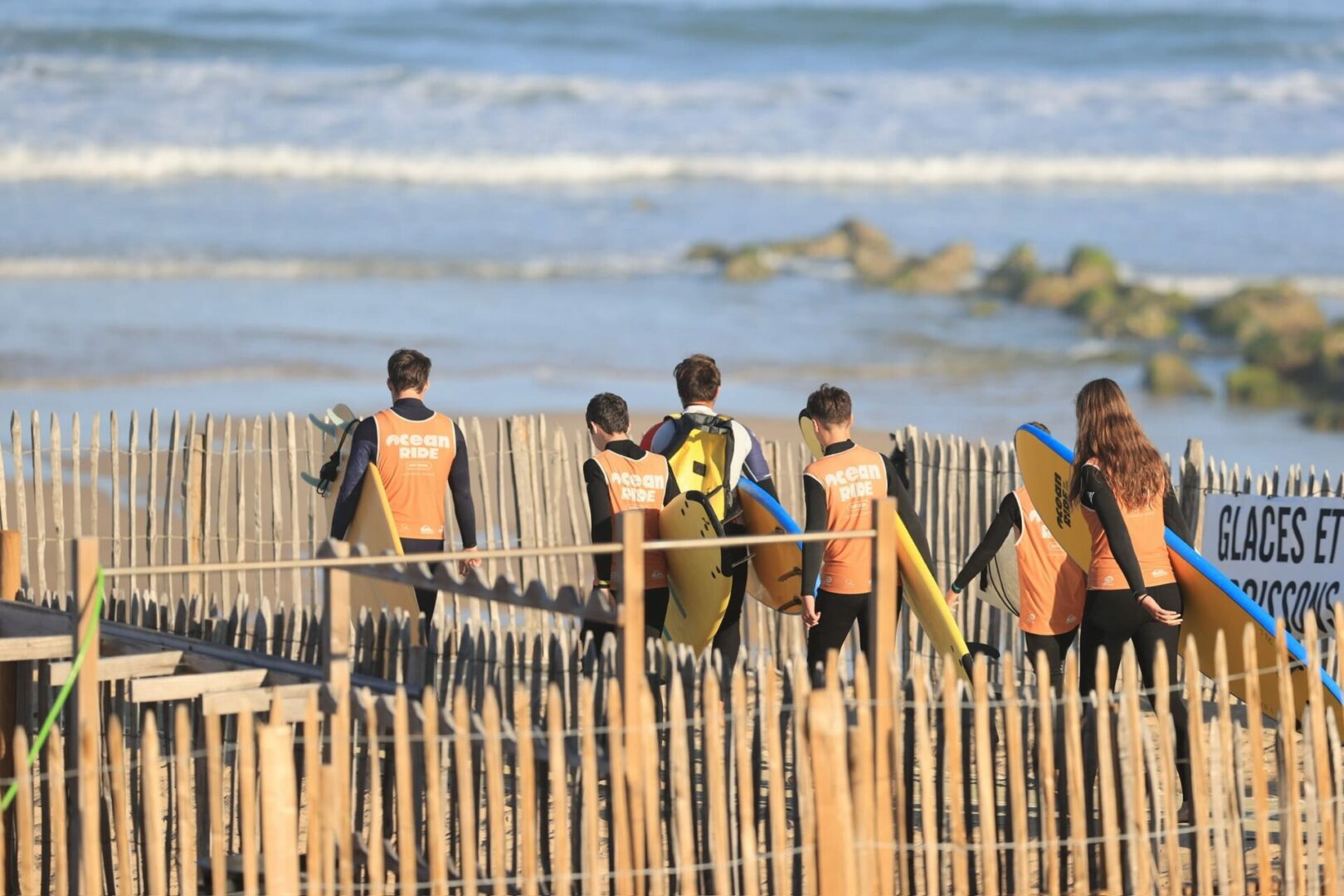
Ocean Ride is located directly in front of the waves in Lacanau-Océan, which allows equipment to be chosen by observing the real conditions of the day. The school also highlights a qualified and attentive team, present on the beach and in the water to guide students.
For children and teenagers
For children, the foam board is almost always recommended. It is lighter, more stable, and more reassuring.
Ocean Ride also offers courses adapted for younger surfers, with dedicated formats depending on age during the summer season.
Mistakes to Avoid Before Buying a Beginner Surfboard
Choosing between a hard board or a foam board is not just comparing two materials. It is about avoiding mistakes that slow down your progression.
Mistake #1: Buying a board that is too short
This is the classic mistake.
You see a small rigid board. It looks nice, light, sporty. You already imagine yourself doing clean turns. But in the water, it lacks volume. You struggle to paddle. You take off too late. You miss waves. And you end up frustrated. A short board is not necessarily a progression board. To progress, you must first catch waves.
Mistake #2: Wanting to leave foam too early
Many beginners want to switch quickly to a rigid board because they associate foam boards with learning. That is a shame, because a good softboard can support you for a long time. It can be used in small waves, for recovery sessions, or simply when you want to surf without overthinking.
The foam board is not a “fake” board. It is a very effective learning tool.
Mistake #3: Choosing only based on price
A cheap but unsuitable board can cost you a lot in progression.
Before buying, consider especially:
- volume
- length
- width
- shape
- your weight
- your level
- your usual surf spot
- how often you surf
Price matters, of course. But a suitable board is worth more than a good deal that stays in the garage.
Mistake #4: Not asking for advice
Surfing is a very technical sport. Two boards that look similar can behave very differently in the water.
Asking for advice from a surf school or instructor saves you time. At Ocean Ride, the team has a wide range of boards and helps students choose equipment based on their level and the conditions.
Our Ocean Ride Recommendation: Start with Comfort, Then Gain Precision
If you are still hesitating between a hard board or a foam board, remember this simple idea:
Start with a board that helps you. Then move on to a board that challenges you.
For a beginner, foam provides stability, safety, and volume. It allows you to catch more waves and build the right movements.
For an intermediate surfer, a semi-rigid board or a large rigid board with volume allows you to gain precision without slowing down progression.
For an advanced surfer, the rigid board becomes interesting for working on lines, positioning, speed, and maneuvers.
The best choice is therefore not fixed. It evolves with you.
Want to know which board really suits you? Book a surf session at Ocean Ride in Lacanau. In real conditions, with an instructor’s guidance, you will quickly understand whether you should stay on a softboard, try epoxy, or move to a rigid board.
FAQ: Hard board or foam board
To start surfing, choose a foam board. It is more stable, more voluminous, and more reassuring than a hard board. It makes paddling, take-off, and catching waves easier.
You can switch to a hard board when you are catching waves regularly, your take-off is stable, and you start going sideways on the wave. Before that, a softboard or a semi-rigid board is often more effective.
A softboard has a foam covering, ideal for learning. A resin or epoxy board is more rigid, often light and buoyant. It is well suited for progressing surfers who want more precision without losing too much comfort.
No. A foam board can also be used by intermediate surfers in small waves, to regain confidence or to surf in a more relaxed way. Some modern softboards are even quite high-performing.
For beginners in Lacanau, a foam board is generally the best choice. The waves can be powerful and changeable. A stable and voluminous board helps you paddle, take off early, and stay confident.
