

Surf Safety Rules: How to Avoid Accidents
Do you feel like trying surfing? That’s often how it all begins: a board, a few whitewater waves near the shore, the ocean in front of you, and the impression that everything looks easy when you watch from the beach.
However, even before talking about take-off or your first waves, there is a foundation every beginner should know: surf safety rules.
People often think that the hardest part when starting is learning how to stand up on the board. In reality, the most important thing is understanding where you’re putting yourself.
Knowing how to observe conditions, choose the right area, use suitable equipment, and adopt the right reflexes in the water is what allows you to progress without putting yourself at risk.
In Lacanau, we see it all the time: first sessions go much better when beginners start in the right conditions, at the right time, and with a minimum of guidance. That’s what makes the difference between a stressful experience and a truly great first session.
Key Takeaways
Arrive 20 minutes early at the surf school so you can get equipped calmly and start your session without stress. The instructor chooses the surf spot based on the waves, the tide, and the group’s level. The lesson includes safety instructions, a warm-up, and technique on the sand before heading into the water to practice paddling, positioning, and take-off. In Lacanau, understanding rip currents is part of the learning process, as identifying them is essential for your safety. At the end of the session, you’ll receive feedback and clear advice to help you improve for your next lesson.
Why Is Surf Safety Essential When You’re Starting?
When you start surfing, what you mainly lack is reference points. It’s not a matter of motivation or even physical condition.
What tends to be the most destabilizing at the beginning is the environment: waves are breaking, sets keep coming, other surfers are moving around, and everything happens faster than you imagined from the beach.
That’s why surf safety rules are so important. They are not there to make learning more complicated. They are there to make it easier.
A beginner who understands from the very first sessions how to position themselves, how to avoid collisions, and how to react to currents or sets will often progress faster than someone who rushes in without solid foundations.
People sometimes think that falling is the only risk. In reality, most problems come from simple mistakes that can easily be avoided: entering the water in the wrong place, choosing a board that is too technical, positioning yourself in a crowded area, or becoming so tired that you lose awareness.
Surfing remains an accessible sport, but it requires humility. And that humility is often the first real safety reflex.
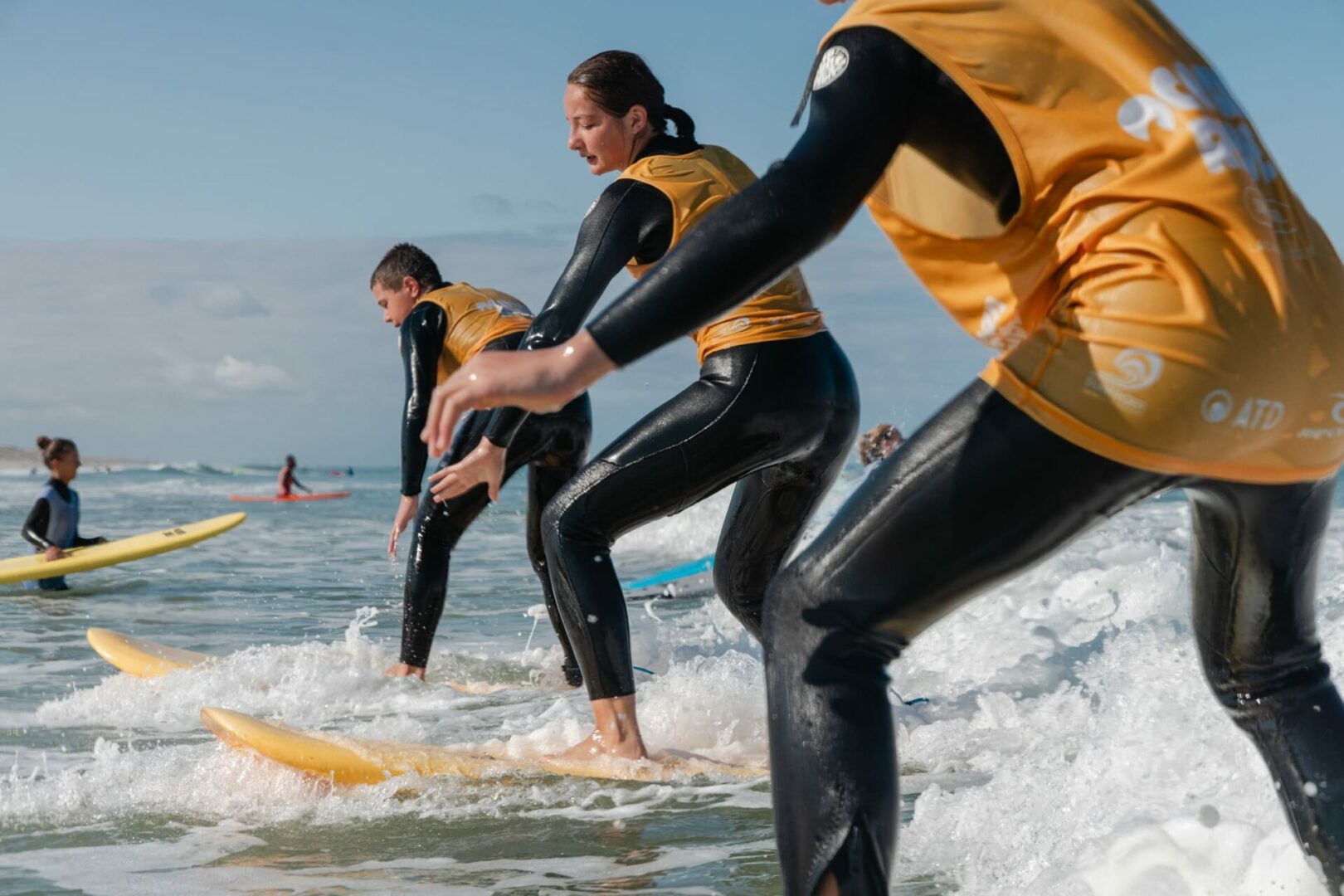
Before Surfing, You Need to Learn How to Read the Ocean
The first thing to do before every session is to watch. Not for thirty seconds while walking toward the water, but to really take the time to observe the ocean.
Take a few minutes to look at the size of the waves, the frequency of the sets, the wind, the tide, the areas where waves break the hardest, and the zones where the water seems to move differently. Also watch other surfers: where are experienced surfers positioning themselves? Where are beginners? Is there a surf school operating in a safer area? This observation time is extremely valuable, especially when you are just starting.
Observing the Spot Before Entering the Water
A surf spot is never fixed. It changes with the tide, the wind, the sandbanks, and the energy of the swell.
What seemed easy the day before can become more technical the next day. That’s why a beginner should never enter the water automatically.
On an ocean beach, you also need to get used to identifying areas that match your level. A less crowded spot is not necessarily safer, and a place with fewer whitewater waves is not necessarily easier to learn in. In surfing, appearances are often misleading.
Be Careful with Rip Currents
In Lacanau, as on much of the Atlantic coast, currents are something that must be taken seriously. It’s a topic many beginners only discover once they are already in the water, when it should actually be understood beforehand.
An area that looks calmer can sometimes be a current channel. That’s exactly what traps some surfers during their first session. They think they’ve found a quieter spot, but they unknowingly place themselves in a more dynamic zone. Once again, observation makes all the difference.
When you’re starting out, there’s a simple rule to follow: if you don’t clearly understand what the ocean is doing that day, don’t improvise. That’s also why learning with a local surf school saves a lot of time. You don’t just learn how to stand up—you also learn how to read the spot.
In the Water, the Right Reflexes Make All the Difference
Once you are in the water, safety mainly depends on your behavior. Surfing is not a solitary activity, even when you are focused on your board. You are sharing a constantly moving space with other people, and most incidents come from a lack of awareness rather than bad intentions.
The first reflex to adopt is to always look around you before taking off on a wave. As a beginner, it’s easy to focus only on your balance, your paddling, or your desire to finally succeed in a take-off. But you need to keep a broader awareness. Is someone already riding the wave? Is another surfer paddling back out? Is a beginner directly in your path?
Respect Priority Rules and Keep Your Distance
Surf priority rules exist to prevent collisions. Even if you don’t fully understand all the lineup rules yet, you can already apply something simple: never rush for a wave without checking that the path is clear. Priority always goes to the surfer closest to where the wave is breaking.
Keeping your distance is just as important. A surfboard can quickly become dangerous if it gets out of control. This often happens when a beginner panics or lets go of their board too quickly when facing whitewater or a set. This reflex is common, but it needs to be corrected early. By maintaining control of your board and avoiding crowded areas, you already greatly reduce the risk of accidents. And always remember to protect your head when you fall.
Don’t Overestimate Your Level
This may be the most useful rule of all. In surfing, trying to go too fast rarely saves time. Many beginners want to paddle out to the lineup, catch “real waves,” or surf where the more experienced surfers are. However, the best first sessions are often the ones spent in the whitewater near the shore, where you can stand, with a clear goal: understand, feel, and repeat.
You have nothing to prove. The smartest approach at the beginning is to choose easy conditions and stay in a zone where you can remain in control. That’s how you build confidence. And that confidence is what will allow you to progress over time.
Equipment Also Plays a Role in Your Safety
We often talk about the spot or the conditions, but equipment also has a real impact on safety. When starting out, you should forget about performance or “stylish” boards. The priority is stability.
A board with enough volume helps you paddle, catch whitewater, and stand up more easily. It is also more forgiving when you make mistakes. On the other hand, a board that is too short or too technical will tire you out more quickly, make positioning harder, and create frustration. And in surfing, frustration is rarely a good ally for safety.
The leash is also essential. It keeps the board attached to you, but it is not an excuse to let it go whenever things get a bit too intense. Once again, the goal is to stay in control. The same applies to your wetsuit: wearing the right gear helps you stay comfortable and focused.
When your equipment is well chosen, your session becomes easier, smoother, and more reassuring. For a beginner, this is far from a detail—it often determines the quality of your experience within the first half hour in the water.
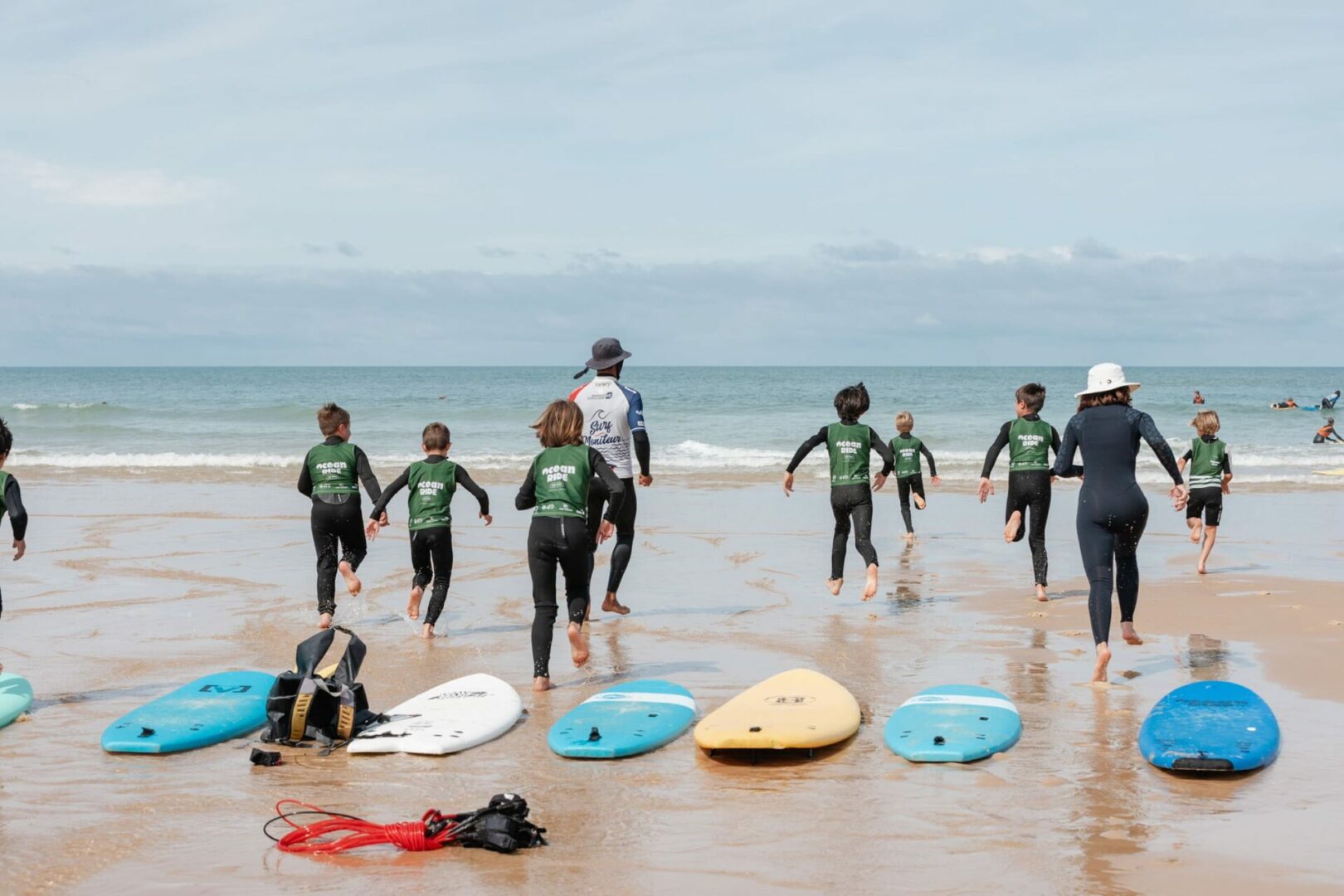
Why Taking a Lesson Is the Best Way to Start Safely
When you want to try surfing, it can be tempting to rent a board and see how it goes. On paper, it seems simple. In reality, a first surf lesson in Lacanau helps you avoid many mistakes and enjoy the session much more.
First, because a surf instructor chooses a spot adapted to your level. Then, because they help you quickly understand what to look for. And finally, because they correct things you wouldn’t notice on your own: your positioning, your posture, how you go through whitewater, your rhythm, and your fatigue.
At Ocean Ride, this guidance is a key part of the experience offered to beginners. The school has been welcoming surfers in Lacanau-Océan for over 15 years and organizes lessons according to age, level, and daily conditions. For anyone who wants to discover surfing without putting themselves in difficulty, this kind of structure makes a real difference.
Discover our article: How does a surf lesson in Lacanau work?
The most valuable part of a first lesson is not just catching your first wave. It’s leaving with real understanding. You better understand what you are doing, why you are doing it, and how to approach your next session with more independence. That’s when surfing truly becomes enjoyable.
Conclusion
Learning to surf is not just about standing up on a board. It’s also about learning how to observe, choose the right conditions, and respect the ocean.
Surf safety rules are there for that: to help you discover the sport with more confidence, more enjoyment, and far fewer unnecessary risks.
When you’re starting out, the best progress doesn’t come from rushing. It comes from proper guidance, a suitable spot, and simple reflexes repeated from your very first sessions. That’s what builds a healthy, lasting, and motivating relationship with surfing.
If you want to discover surfing in Lacanau in the best conditions, Ocean Ride remains an ideal gateway to learn with the right equipment, in the right place, and with teaching methods designed for beginners.
Surf Safety FAQ
The main surf safety rules start well before entering the water. The first step is to observe the spot: wave size, wind direction, tide, set frequency, current direction and strength, and the presence of other surfers or swimmers.
Next, you need to choose an area suited to your level, always keep the water no deeper than waist height, and pick a reference point on the beach to avoid drifting too far. A beginner has no reason to position themselves in an exposed area or among more experienced surfers.
In the water, the basics are simple but essential: keep your distance, respect priority rules, avoid letting go of your board carelessly, protect your head when you fall, and never place your board between yourself and the wave. Many accidents don’t come from a lack of courage, but from a lack of anticipation. In surfing, safety relies mainly on observation, common sense, and the ability to avoid situations you don’t yet fully understand.
To avoid accidents when starting out, the most important thing is not to skip steps. You should begin with easy conditions, a stable board, and a zone where you can learn without pressure. Beginners often want to progress quickly, but in surfing, going too fast is often the best way to get scared or end up in difficulty.
You also need to accept that a good first session is not necessarily one where you immediately stand up, but one where you understand how to position yourself, how to fall safely, how to manage your board, and how to read what’s happening around you. That’s why taking a lesson remains the best option at the beginning: you avoid common mistakes, develop better reflexes, and enjoy the experience more.
And before anything else, it’s important to warm up properly: preparing your body helps reduce the risk of injury.
Currents are dangerous for beginners because they are often misunderstood. From the beach, a calmer-looking area can seem reassuring. However, on some ocean beaches like Lacanau, this impression can be misleading. A beginner may drift without really understanding what’s happening, then become exhausted trying to return too quickly or in the wrong direction.
The danger doesn’t just come from the current itself, but from the reaction it triggers: stress, panic, and loss of awareness. When you panic, you paddle less efficiently, breathe poorly, and make worse decisions. That’s why it’s essential to learn early on how to observe the spot, identify areas where the water moves differently, and never enter the water without taking a few minutes to assess the conditions.
The first thing to do is slow down. In surfing, panic often comes from a chain reaction: fatigue, loss of reference points, a poorly handled wave, or the feeling of being overwhelmed. As soon as you feel uncomfortable, avoid pushing on out of pride or trying to “save” your session. It’s better to reset, breathe, move back to an easier area, or get out of the water for a few minutes.
Many beginners think they must stay in the water at all costs to improve. That’s not true. Taking a short break can actually prevent a bad decision or a real scare. Surfing requires physical energy, but also mental clarity. As soon as you feel that clarity fading, the best reflex is often to simplify the situation.
